Balaraju M
Co-founder and CEO
Builds the computational side of Prometheus: the engineering application, the optimization layer and the proprietary geometry solver.
Prometheus combines propulsion physics, computational optimization and precision manufacturing to develop next-generation propulsion hardware.
Computationally designed. Physically manufactured.
Design, analysis, optimization, CAM and machining usually live in separate tools, and often in separate companies. Every handoff re-models the part, loses information and adds weeks.
When a test result comes back, it rarely reaches the next design in a form anyone can use. The loop from requirement to validated hardware stays long, and every iteration is expensive.
Rotating and thermal propulsion components: compressor and cold-section hardware, impellers and combustor assemblies, machined in-house from aerospace alloys.
Our own software carries a part from propulsion requirement to physics model, optimized geometry, toolpath and G-code. Our own machines cut it, and our own inspection measures it.
Quantum-classical optimization is one layer inside that pipeline, applied where a design problem has the right combinatorial structure. It is a differentiator, not the product.
How the technology fits togetherPhysical validation data returns to the start of the loop and informs the next design.
Stage 1 of 10, requirements layer
The mission or component requirement defines the problem.
Every run starts from an engineering requirement: operating envelope, loads, temperatures, envelope constraints and the material the part will be made from.
60
days, raw billet to fully machined
We reverse-engineered a GE T700 cold-section module and rebuilt it through our own computational, geometry and manufacturing pipeline: end-to-end proof on real turbomachinery.
The validation program in detail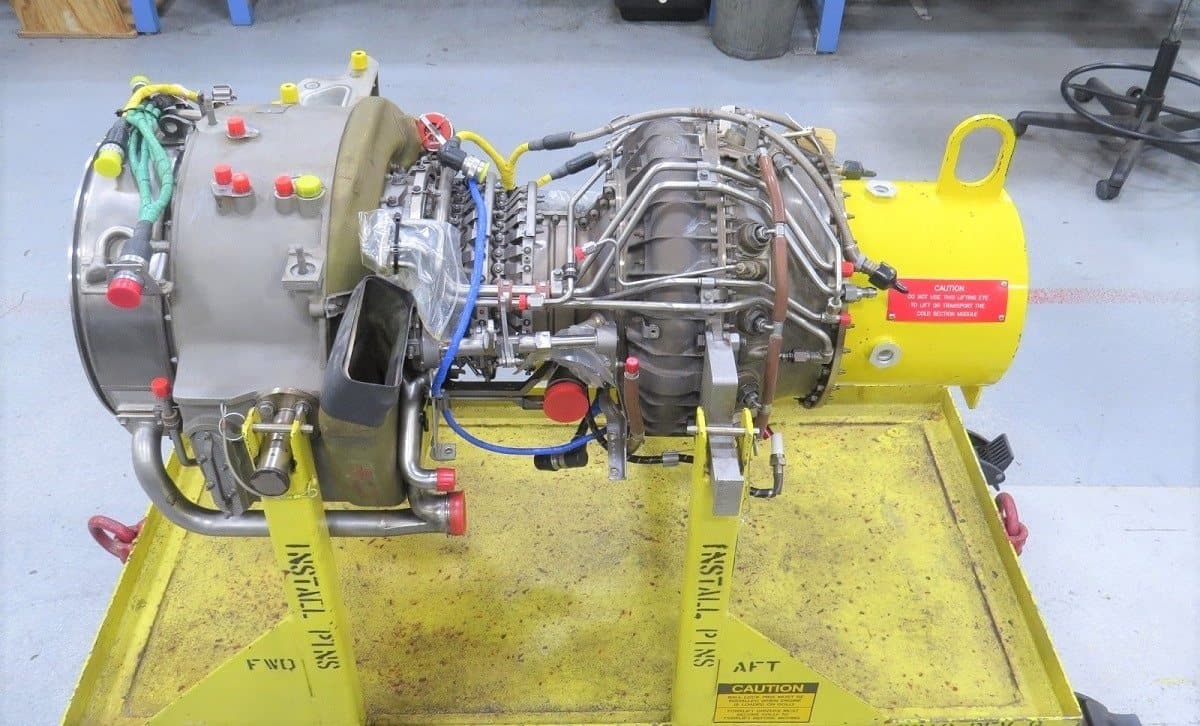
The photographs show the reference GE T700 hardware we reverse-engineered for this program.
| Count | Current |
|---|---|
| 3 | Active design partners Two defense and aerospace startups, and one university propulsion laboratory. |
| 2 | Signed MOUs and LOIs Including an LOI for a custom impeller and combustor assembly valued at approximately $18,000. |
| 1 | Physical validation completed GE T700 cold-section module, raw billet to fully machined in 60 days. |
LOIs and MOUs are statements of intent, not revenue. The first paid unit is expected after partner validation.
Any one of these layers can be bought or hired. The hard part is running them as one system, where every manufactured component produces measured data that improves the next design and the next machining decision.
Compressor and cold-section hardware. Validated on the GE T700 cold-section module.
Demonstrated
A custom impeller and combustor assembly is the subject of a signed LOI with a design partner.
Under LOI
Compact, high-performance rotating and thermal hardware for unmanned systems.
Target
Propulsion components for defense and aerospace programs, starting with our design partners.
Target
Turbomachinery and thermal components for rocket propulsion systems.
Target
Co-founder and CEO
Builds the computational side of Prometheus: the engineering application, the optimization layer and the proprietary geometry solver.
Co-founder, CTO and Head of Manufacturing
Owns the physical side of Prometheus: propulsion physics, CAM and toolpaths, machining and physical validation.
The founders have known each other for about six years and have worked together on high-temperature turbomachinery R&D.
For investors, design partners and propulsion programs. We reply personally.